

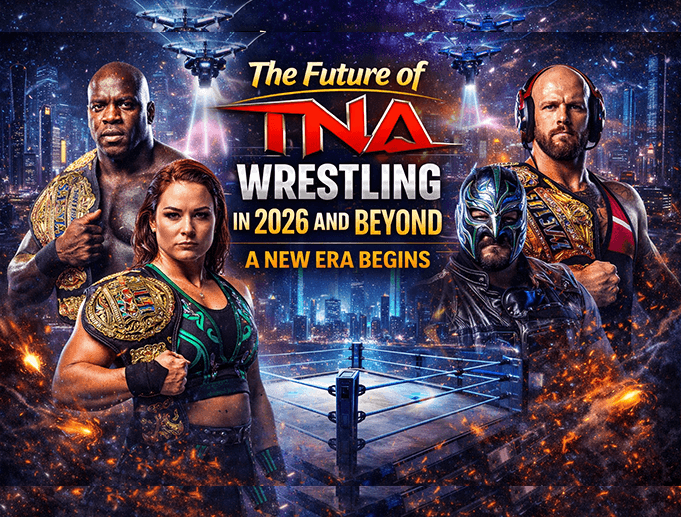
For nearly two decades, TNA Wrestling has been the comeback kid of professional wrestling. The company has faced ownership changes, network shifts, financial struggles, and countless predictions of its demise. Yet here it stands in 2026, not just surviving but showing signs of genuine momentum.
The wrestling landscape has shifted dramatically since TNA first emerged in 2002. WWE has grown into a global media empire. All Elite Wrestling has established itself as a legitimate alternative. New Japan and other international promotions have expanded their reach. In this crowded market, finding a sustainable position is no easy task.
Yet TNA enters 2026 with reasons for optimism. A new television home, a roster blending experience with youth, a renewed focus on the divisions that made the company famous, and a strategic approach that prioritizes steady growth over flashy moves all point toward a future that could look very different from the recent past.
At Ringside Wrestler, we have watched TNA’s journey from the beginning. We have seen the highs and the lows. This is our look at where the company is headed in 2026 and the years beyond.
A New Television Beginning
The most significant development for TNA in 2026 is the move to a major cable network. After years on smaller platforms with limited reach, the company now has a home that brings its product to millions of households across America.
This is not just about numbers. It is about perception. When a wrestling company appears on a well-known network, it carries an implicit endorsement. Fans who might have dismissed TNA as a minor league operation now have reason to take another look. Advertisers who ignored the company now see a partner worth considering.
The commitment to live programming matters enormously. TNA is now delivering weekly live events, which changes everything about how the product is presented. Live television forces discipline. It demands that wrestlers be ready when the clock starts. It creates moments that cannot be edited or fixed in post-production. The energy is different, and fans can feel it.
The international picture is improving as well. Deals in multiple territories mean that TNA programming is now available to fans around the world. The company’s streaming service provides a direct-to-consumer option that ensures no fan is left behind, regardless of where they live.
For years, TNA fans had to explain to friends that the company existed on a channel they had never heard of. That era is ending. The new television reality means that discovery is easier, sampling is simpler, and growth is possible.
The Talent Pipeline
Every wrestling promotion is ultimately judged by its roster. TNA in 2026 has found an interesting balance between recognizable names and hungry newcomers.
The Veterans Who Still Deliver
The top of the card still features wrestlers who have been with the company through various eras. These are names that longtime fans know and trust. They provide stability and name recognition that helps sell tickets and draw viewers.
The Hardys continue to create moments that capture attention. Their chemistry, developed over decades, remains undiminished. When they step into the ring, fans know they will see something memorable.
Frankie Kazarian represents consistency at its finest. He has been delivering quality performances for years, and that has not changed. His matches are reliable, his character work is sharp, and his presence in the locker room helps younger talent navigate the business.
Moose has established himself as a main event presence who can work with anyone. His combination of size, athleticism, and intensity makes him a credible champion and a valuable asset.
These veterans serve a purpose beyond their own matches. They work with younger talent, helping them understand the nuances of the business. They provide a measuring stick for wrestlers who aspire to reach the top of the card. They are the foundation upon which the future is built.
The Rising Stars
But it is the younger generation that represents TNA’s future. And in 2026, that future looks promising.
The X-Division has found a new standard-bearer in a young champion who brings high-flying energy and infectious enthusiasm to every match. This is exactly what the division needed: someone who understands its history while creating his own legacy. His matches are must-see attractions, and his potential ceiling is extremely high.
The Knockouts division continues to develop new talent. One young wrestler has undergone a remarkable transformation, evolving from a tag team specialist into a compelling singles competitor. Her intensity, her willingness to embrace violence, and her connection with fans suggest that championship gold is in her future.
Another emerging talent has reinvented himself after time in other promotions. His character work is sharp, his in-ring ability is proven, and his understanding of how to generate heat makes him a valuable villain. He is the kind of wrestler who can elevate anyone he works with.
The tag team divisions have also seen fresh energy. New teams are emerging, bringing different styles and personalities to the mix. The chase for tag team gold creates compelling stories and ensures that the division remains relevant.
The Divisions That Define TNA
Throughout its history, TNA has been defined by two things: the X-Division and the Knockouts. In 2026, both remain central to the company’s identity.
The X-Division Revival
The X-Division was once TNA’s signature attraction. “It’s not about weight limits, it’s about no limits” captured something essential about what made the company different. For a time, the X-Division was the most exciting thing in American wrestling.
In recent years, the division had lost some of its luster. It was still there, still producing good matches, but it no longer felt like the must-see attraction it once was. That is changing.
The new X-Division champion represents a commitment to making the division matter again. His style honors the high-flying tradition while adding his own twists. His enthusiasm is contagious, making fans care about the division in ways they have not in years.
The depth behind the champion is encouraging. Several challengers have emerged, each bringing something different. Some are pure athletes who push the boundaries of what is physically possible. Others are technical wrestlers who focus on mat work and submissions. The variety ensures that title matches feel different each time.
The philosophy behind the X-Division remains sound. Give talented wrestlers opportunities to showcase what they can do. Let them push each other to new heights. Trust that fans will appreciate excellence when they see it.
The Knockouts Tradition
The Knockouts division has been a strength since its inception. TNA was ahead of its time in treating women’s wrestling as equal to men’s wrestling, and that commitment has never wavered.
The current Knockouts roster blends experienced hands with hungry newcomers. The championship scene features compelling rivalries that are given time to develop. Matches are positioned as important, not as bathroom breaks.
One of the division’s strengths is its variety. Power wrestlers, technical specialists, high-fliers, and brawlers all coexist. This diversity ensures that the Knockouts division never feels repetitive.
The development of younger talent ensures that the division will remain strong for years to come. Wrestlers who grew up watching the Knockouts are now competing in the division, bringing influences from the past while creating their own identities.
What sets the Knockouts apart is the same thing that always set them apart: they are treated as athletes, not attractions. Their stories matter. Their matches have stakes. Their championships mean something.
The Business Foundation
Behind the scenes, TNA is building a business infrastructure designed for long-term success.
The Streaming Strategy
The company’s streaming service provides a direct connection to fans. Weekly programming, pay-per-view events, and the extensive library are all available in one place. As traditional television viewing continues to evolve, having a robust streaming option is essential.
The service is available worldwide, ensuring that no fan is excluded by geography. International viewers who cannot access the television broadcast can still watch through the streaming platform. This global reach expands the potential audience beyond what traditional distribution can provide.
Live Events
Live events remain a priority. The energy of a live crowd cannot be replicated in a studio. The chemistry between wrestlers and fans creates moments that television cannot capture.
The company is committed to increasing the number of live events, bringing the product to fans in major markets across the country. These events generate revenue, build loyalty, and create content for the streaming service.
International dates are also part of the strategy. Wrestling has a global audience, and bringing the product to fans around the world strengthens the connection between the company and its audience.
Merchandise and Licensing
Merchandise sales provide another revenue stream. T-shirts, hats, and other items allow fans to show their support while generating income for the company and its wrestlers.
The licensing strategy focuses on quality over quantity. Items are designed to appeal to fans who want to represent their favorite wrestlers. The emphasis is on creating products that fans actually want to wear.
The Competition Question
TNA operates in a crowded market. WWE dominates the industry with resources that no one else can match. AEW has established itself as a legitimate number two with passionate fans and significant financial backing. New Japan and other international promotions compete for attention.
Where does TNA fit?
The answer lies in being the best version of itself rather than trying to be something it is not. TNA does not need to outspend WWE or out-produce AEW. It needs to deliver a product that appeals to fans who want something different.
The X-Division and Knockouts provide that differentiation. No other promotion treats these divisions with the same priority. For fans who value high-flying action and quality women’s wrestling, TNA offers something they cannot get elsewhere.
The scale is different, and that is acceptable. A smaller company can be more agile, more responsive to fan feedback, more willing to take creative risks. The goal is not to be the biggest; it is to be the best at what it does.
The relationship with WWE has also clarified TNA’s position. Rather than positioning itself as a direct competitor, TNA has become a complementary product. WWE fans who discover TNA through crossovers may stick around for the original content. TNA fans who watch WWE get the thrill of seeing their favorites on a bigger stage.
This is smart positioning that recognizes the realities of the current market.
The Creative Direction
The storytelling in TNA focuses on simple concepts with real stakes. Fans do not need a graduate degree in wrestling history to understand what is happening. The stories are clear, the characters are defined, and the stakes are obvious.
The Feast or Fired concept is a perfect example. Multiple competitors fight to retrieve briefcases hanging above the ring. Three contain championship opportunities. One contains a termination notice. The person who grabs that briefcase is fired from the company.
This is brilliant in its simplicity. Fans understand the stakes immediately. Every moment of the match carries weight because the consequences are real. The wrestler who grabs the wrong briefcase actually loses their job, at least temporarily.
Match quality remains a priority. The roster is filled with talented wrestlers who deliver night after night. The variety of styles ensures that every show offers something different. Fans who appreciate technical wrestling get their fix. Fans who want high-flying action get their fix. Fans who enjoy hardcore brawling get their fix.
The balance between established names and rising talent keeps the product fresh. Veterans provide stability while younger wrestlers bring energy and hunger. The combination works.
The Challenges Ahead
No realistic assessment of TNA’s future would ignore the challenges.
Consistency has always been an issue. TNA has had moments of momentum before, only to lose them through creative missteps or behind-the-scenes turmoil. Maintaining the current positive trajectory requires disciplined decision-making.
Talent retention is an ongoing concern. As TNA wrestlers gain visibility, they become targets for larger promotions with bigger budgets. Losing top talent is inevitable; the challenge is developing enough depth to absorb those losses.
Production values matter to modern audiences. Fans have become accustomed to a certain level of presentation. Matching that standard requires investment.
Competition for attention is fierce. The wrestling audience is finite, and fans have more options than ever. Standing out requires a clear identity and consistent execution.
Financial discipline is essential. The wrestling business is littered with companies that grew too fast, spent too much, and collapsed under the weight of their ambitions. Sustainable growth is preferable to flashy moves that risk everything.
The Five-Year Outlook
Looking ahead to 2030, what might TNA look like?
The most likely scenario is steady, sustainable growth. The company becomes firmly established as a stable number two or three promotion with consistent television ratings, profitable live events, and a global streaming presence.
The roster features homegrown stars developed through the current system. Fans who are now rising stars have become established main eventers. The X-Division and Knockouts remain the company’s defining features.
The television partnership has been renewed and strengthened. Production values have improved. The weekly product is reliable, entertaining, and distinct from what competitors offer.
The business is profitable enough to invest in talent development, production improvements, and occasional strategic signings without risking financial stability.
This is not the vision of TNA becoming WWE’s equal. It is a more modest, more sustainable vision of TNA finding its lane and thriving within it.
For a company that has faced as many challenges as TNA has, that would be a remarkable achievement.
The Fan Connection
Throughout all the changes, one thing has remained constant: the fans who stuck with TNA through the lean years.
TNA fans are passionate. They have watched their favorite promotion survive network changes, ownership transitions, and countless narratives about the company’s imminent demise. They have stuck around because they believe in the product.
In 2026, that belief feels validated. The new television deal means more people can discover what existing fans already love. The rising stars give fans someone to invest in for the long term. The sense of momentum creates excitement about what comes next.
There is pride in watching homegrown talent develop and succeed. There is satisfaction in seeing the company finally get the recognition it deserves. There is hope that the best years are still ahead.
Wrestling is better when TNA is healthy. More options for fans. More opportunities for wrestlers. More competition that pushes everyone to improve.
A rising TNA lifts all boats.
Final Thoughts
The future of TNA Wrestling in 2026 and beyond is not guaranteed. The wrestling business is unpredictable, and companies that look strong today can stumble tomorrow.
But the foundation is solid. A better television home provides visibility and resources. A roster blending veterans and rising stars creates stability and excitement. A clear identity based on the X-Division and Knockouts differentiates the product from competitors. A sustainable business strategy prioritizes long-term growth over short-term gains.
The six-sided ring is a memory. The weekly pay-per-views are history. But the spirit of TNA—the belief that wrestling can be different, that alternative visions matter, that fans deserve options—remains alive.
In 2026, that spirit has a platform.
The future is coming.
And for TNA Wrestling, it looks worth watching.
Ringside Wrestler is your home for TNA coverage, wrestling analysis, and comprehensive reporting on the sport we love. Check back daily for updates on TNA’s continued journey.