

There are voices that define generations.
In professional wrestling, very few voices carry the emotional weight, credibility, and passion of Jim Ross.
For millions of fans across the United States and around the world, Jim Ross isn’t just a commentator. He’s the soundtrack of wrestling history.
He has called the greatest matches in wrestling history, narrated moments that shocked arenas full of fans, and delivered iconic commentary that still echoes through highlight reels decades later.
From the explosive chaos of the WWE Attitude Era to the modern rise of All Elite Wrestling, Ross has been present for many of the industry’s most defining moments.
And today, he’s still telling those stories.
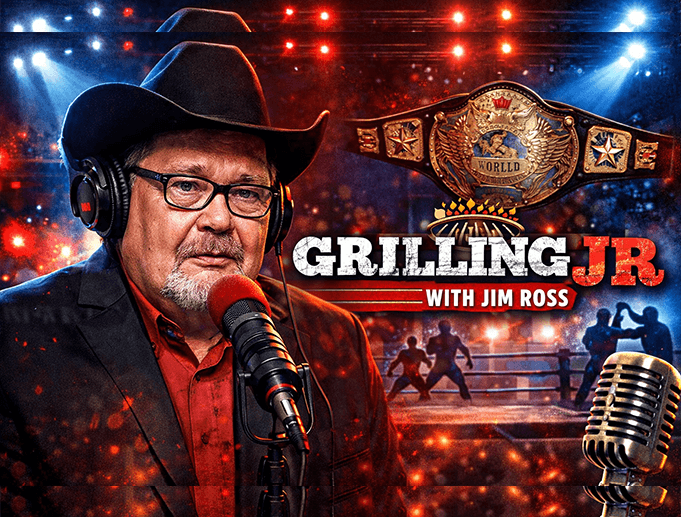
Through his popular podcast Grilling JR, Ross pulls back the curtain on decades of wrestling history, sharing memories, insights, and behind-the-scenes details that fans simply can’t find anywhere else.
If you’re a wrestling fan who loves hearing the real stories behind the ring, this podcast is essential listening.
The Man Behind the Voice: Who Is Jim Ross?
Before diving into the podcast itself, it’s important to understand why Jim Ross is such an important figure in professional wrestling.
Ross isn’t just another announcer.
He’s widely considered the greatest play-by-play commentator in wrestling history.
Born as James William Ross, he spent his early years in rural Oklahoma, where hard work and small-town values shaped his personality. Life in places like Westville meant long days, tight communities, and strong family ties.
Those early experiences helped shape Ross into the authentic storyteller fans know today.
During high school, Ross showed early signs that he was comfortable speaking in front of crowds. He competed in public speaking events while also playing sports like football and baseball.
But the path toward wrestling wasn’t obvious at first.
From College Radio to the Wrestling Ring
Ross attended college in Oklahoma, where he worked at the campus radio station.
That’s where he began learning the fundamentals of broadcasting:
- Vocal projection
- Storytelling through voice
- Real-time reaction
- Emotional delivery
Those early experiences laid the foundation for what would eventually become a legendary broadcasting career.
Ironically, Ross didn’t start his wrestling career as a commentator.
He began as a referee.
Working inside the ring gave him a close look at how professional wrestling actually worked. He learned the rhythms of matches, the psychology between performers, and the art of storytelling through physical performance.
This experience gave Ross something many commentators lack: true in-ring awareness.
When he eventually moved behind the microphone, he understood the action on a deeper level than most announcers ever could.
The Birth of the Grilling JR Podcast
By the late 2010s, Jim Ross had already accomplished nearly everything imaginable in wrestling.
He had called WrestleMania main events, helped recruit future superstars, and earned a place in multiple halls of fame.
So what could come next?
The answer was podcasting.
Ross teamed up with podcast host Conrad Thompson, who had already built a reputation for creating deep-dive wrestling podcasts with industry legends.
Together, they launched Grilling JR, a show dedicated to exploring Ross’s incredible career.
The concept was simple but brilliant.
Each week, Ross would revisit a specific moment in wrestling history:
- Major pay-per-view events
- Legendary matches
- Industry controversies
- Career-defining moments
Nothing was off limits.
Ross answered questions fans had wondered about for decades.
Why Grilling JR Works So Well
Many wrestling podcasts exist today, but Grilling JR stands out for a few important reasons.
Authentic storytelling
Ross doesn’t read from notes.
He simply remembers.
Stories flow naturally as he recalls moments from decades of experience in the wrestling business.
Behind-the-scenes insight
Fans often see only the finished product on television.
Ross explains what was happening backstage:
- Creative decisions
- Talent negotiations
- Production challenges
- Promoter politics
These details transform wrestling history into something far more fascinating.
Incredible chemistry
The dynamic between Ross and Conrad Thompson creates an engaging conversation.
Thompson represents the passionate fan who grew up watching these moments, while Ross provides firsthand perspective from inside the industry.
That contrast keeps the discussions lively and unpredictable.
Revisiting Wrestling’s Territorial Era
One of the most fascinating parts of the podcast involves Ross discussing the old territory system that existed before wrestling became a global entertainment industry.
During the 1970s and early 1980s, wrestling promotions operated regionally across the United States.
Each territory had its own stars, promoters, and style.
Ross worked with legendary figures such as:
- Bill Watts
- Jim Crockett Jr.
These promoters ran their organizations like serious businesses.
Ross frequently shares stories about the grueling travel schedule during this time.
Wrestlers would drive thousands of miles every week, performing in small towns and large cities alike.
There were no luxury tour buses.
Just long highway drives, cheap motels, and a relentless schedule.
But those difficult conditions created a unique sense of camaraderie among wrestlers and staff.
The Rise of WWE and the Monday Night Wars
Ross eventually joined WWE, where his career truly exploded.
During the 1990s, he served both as a commentator and a talent relations executive.
In that role, Ross helped bring future legends into the company.
Some of the names he helped recruit or support include:
- Stone Cold Steve Austin
- The Rock
- Mick Foley
Ross also witnessed the famous Monday Night Wars, when WWE competed directly with World Championship Wrestling for television dominance.
This era changed wrestling forever.
Ratings soared.
Storylines became more daring.
Superstars became mainstream celebrities.
And Jim Ross was the voice guiding fans through it all.
The Most Iconic Commentary Moments Ever
Over the years, Ross delivered some of the most unforgettable calls in wrestling history.
Perhaps the most famous occurred during the WWE King of the Ring 1998, when The Undertaker threw Mick Foley off the top of a steel cage.
Ross’s shocked reaction instantly became legendary.
His emotional delivery made viewers feel the intensity of the moment.
Lines like:
“Good God almighty!”
are now permanently embedded in wrestling culture.
Ross’s commentary succeeded because it felt genuine.
He didn’t sound scripted.
He sounded like a fan experiencing the moment alongside the audience.
A New Chapter With All Elite Wrestling
In 2019, Ross made headlines again when he joined All Elite Wrestling (AEW).
At an age when many broadcasters would be retired, Ross embraced a new challenge.
AEW offered something that appealed to his love of wrestling:
- A focus on athletic competition
- Creative freedom
- Respect for wrestling tradition
Ross’s presence immediately added credibility to the young promotion.
For longtime fans, hearing his voice on national television again was a powerful wave of nostalgia.
Life Outside the Commentary Desk
One of the most enjoyable aspects of the podcast is learning about Jim Ross beyond wrestling.
Barbecue passion
Ross is a serious barbecue enthusiast.
He has launched his own line of barbecue sauces and products, which reflect his love for authentic Southern cooking.
Football fandom
As a proud Oklahoman, Ross remains deeply passionate about college football.
He often discusses games and teams during podcast episodes, showing another side of his personality.
Returning home
After decades of travel, Ross eventually returned to Oklahoma permanently.
Living closer to family and familiar surroundings has given him a sense of peace that comes through in his podcast conversations.
Personal Challenges and Incredible Resilience
Ross has faced significant personal challenges throughout his life.
He has lived with Bell’s Palsy, which affects the muscles on one side of his face.
Rather than hiding the condition, Ross has spoken openly about it.
His honesty has helped fans connect with him on a deeper level.
He has also endured heartbreaking personal loss after the tragic passing of his wife.
Ross has discussed grief and recovery with remarkable openness on the podcast.
These conversations remind listeners that behind the legendary voice is a real human being who has faced the same struggles many people experience.
Why Wrestling Fans Love Grilling JR
The podcast has built a loyal fanbase for several reasons.
Real wrestling history
Ross provides firsthand accounts of moments that shaped the wrestling industry.
Honest opinions
He isn’t afraid to critique decisions or explain mistakes made in the past.
Emotional storytelling
Ross speaks with genuine emotion when discussing the wrestlers and moments that meant the most to him.
For fans who grew up watching wrestling during the 1980s, 1990s, and early 2000s, the podcast feels like revisiting their childhood.
The Lasting Legacy of Jim Ross
Few people in wrestling history have had the same level of influence as Jim Ross.
His voice defined eras.
His decisions helped shape careers.
And his storytelling continues to preserve wrestling history for future generations.
Through Grilling JR, Ross has created something incredibly valuable.
Not just entertainment.
But a living archive of wrestling’s past.
Each episode captures memories that might otherwise be lost forever.
For wrestling fans, historians, and newcomers alike, that makes the podcast something truly special.
Why Every Wrestling Fan Should Listen
If you enjoy wrestling history, storytelling, or behind-the-scenes insight, Grilling JR deserves a spot in your podcast rotation.
The show offers:
- Incredible historical insight
- Emotional storytelling
- Honest reflections from one of wrestling’s greatest voices
Listening to Jim Ross talk about wrestling feels like sitting across from a legend who has seen everything the business has to offer.
And when he begins a story, you know one thing for sure.
Business is about to pick up.