

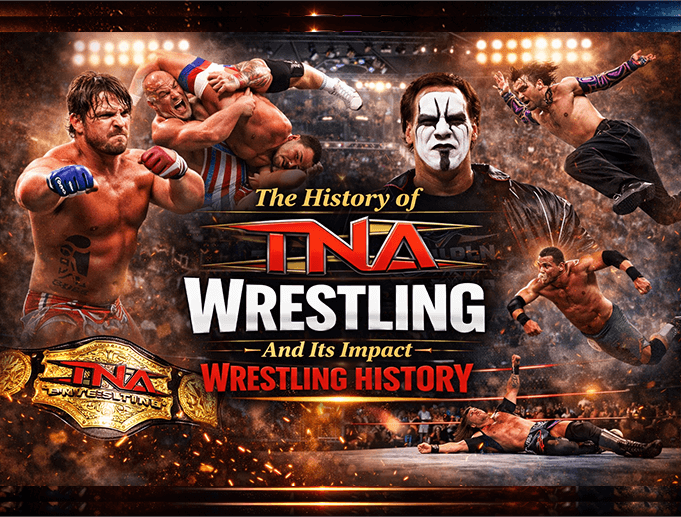
Professional wrestling has always evolved through competition, innovation, and new ideas. For decades, the industry was dominated by one major promotion, but several challengers attempted to bring fresh energy to the sport. Among them, Total Nonstop Action Wrestling—better known as TNA—emerged as one of the most influential wrestling promotions of the modern era.
Since its launch in 2002, TNA has played a significant role in shaping the global wrestling landscape. From introducing groundbreaking match types to developing some of the most talented performers in the industry, TNA helped redefine what professional wrestling could look like in the 21st century.
Today, the promotion continues under the banner of Impact Wrestling, but its legacy as TNA remains an important chapter in wrestling history.
In this comprehensive guide, we will explore the history of TNA Wrestling, how it grew from a small startup promotion into a global brand, and how it influenced the wrestling industry worldwide.
The Birth of TNA Wrestling
TNA Wrestling was founded in 2002 by wrestling promoters Jeff Jarrett and his father Jerry Jarrett. Their vision was to create a new wrestling company that could offer an alternative to the dominance of WWE.
At the time, the wrestling industry had recently gone through major changes. The end of the famous Monday Night Wars left WWE as the primary major promotion in North America.
Many fans felt that professional wrestling needed fresh competition and new ideas. Jeff and Jerry Jarrett saw this opportunity and decided to launch TNA as a new platform for talent and creativity.
Unlike traditional wrestling promotions that relied heavily on television networks, TNA initially adopted a unique business model.
The Weekly Pay-Per-View Experiment
In its early days, TNA used an innovative distribution system. Instead of weekly television shows, the company produced weekly pay-per-view events that fans could purchase for a lower price.
These events were broadcast live from the Nashville Fairgrounds in Tennessee. The format allowed the promotion to generate revenue while also giving fans regular wrestling content.
Although the system was financially challenging, it helped TNA build an early fan base and establish itself as a serious wrestling promotion.
During this period, the company began developing some of the stars who would later become household names in professional wrestling.
The Rise of the X-Division
One of the most influential innovations introduced by TNA was the X-Division.
Unlike traditional wrestling divisions that focused primarily on weight classes, the X-Division emphasized high-speed, high-risk, and innovative wrestling styles.
The famous slogan for the division was:
“It’s not about weight limits. It’s about no limits.”
This philosophy allowed wrestlers to showcase incredible athleticism and creativity inside the ring.
Several performers became legends within the X-Division, including:
- AJ Styles
- Christopher Daniels
- Samoa Joe
Their matches introduced many fans to a faster and more athletic style of wrestling that would later influence promotions around the world.
Today, many modern wrestling styles—including those seen in international promotions—can trace their roots back to the innovations of the TNA X-Division.
The Arrival of National Television
A major turning point in TNA’s history came when the company secured television deals that expanded its audience.
One of the most important moments occurred when TNA launched its flagship program, Impact!, which eventually became Impact Wrestling.
The show allowed the promotion to reach millions of viewers and present its roster on a much larger stage.
Through television exposure, TNA began building stronger storylines, developing characters, and presenting major championship rivalries.
This era helped the company gain credibility as a legitimate competitor within the wrestling industry.
The Influence of Wrestling Legends
Another factor that contributed to TNA’s growth was the arrival of established wrestling legends.
Several high-profile stars joined the promotion during its expansion period, bringing valuable experience and name recognition.
Among the most notable were:
- Kurt Angle
- Sting
- Jeff Hardy
Their presence helped attract new fans and elevated the promotion’s credibility within the wrestling world.
Kurt Angle in particular became one of the most dominant champions in TNA history, delivering some of the most intense and technical matches ever seen in the promotion.
Meanwhile, Sting’s legendary career continued in TNA, where he remained a central figure in major storylines for many years.
The Creation of Iconic Matches and Events
Throughout its history, TNA introduced several unique match types and memorable events that helped distinguish it from other promotions.
One of the most notable innovations was the Ultimate X Match, where competitors must retrieve a championship belt suspended above the ring by climbing ropes arranged in an “X” shape.
This match became one of TNA’s signature attractions and showcased the incredible athleticism of the X-Division wrestlers.
Other popular match concepts included:
- Six-Sided Ring matches
- Hardcore stipulation matches
- High-risk ladder contests
These innovations gave TNA a distinct identity and helped attract wrestling fans looking for something different.
The Role of Homegrown Stars
While TNA benefited from established wrestling legends, one of its greatest achievements was developing new stars.
Many performers who gained recognition in TNA later became major stars in other wrestling promotions.
Among the most successful homegrown talents were:
- Bobby Roode
- James Storm
- Abyss
These wrestlers helped define the identity of TNA and delivered memorable matches that strengthened the promotion’s reputation.
AJ Styles, in particular, became widely recognized as the face of TNA during its early years. His incredible in-ring ability and versatility made him one of the most respected wrestlers in the industry.
The Six-Sided Ring Era
Another unique feature that distinguished TNA from other promotions was the use of the six-sided wrestling ring.
Unlike the traditional four-sided ring used by most promotions, TNA introduced a six-sided ring that provided a different visual presentation and allowed wrestlers to perform innovative moves.
The ring became one of the promotion’s most recognizable symbols and helped create a unique viewing experience for fans.
Although the company eventually returned to a traditional four-sided ring, the six-sided design remains an iconic part of TNA’s identity.
Challenges and Controversial Periods
Like many wrestling promotions, TNA experienced several challenging periods during its history.
Changes in leadership, creative direction, and business strategy sometimes created instability for the company.
At times, critics argued that the promotion relied too heavily on established veterans rather than focusing on developing new talent.
Despite these difficulties, TNA continued producing entertaining wrestling content and maintained a loyal fan base.
The promotion’s ability to survive multiple challenges demonstrated the dedication of its performers and management.
The Transition to Impact Wrestling
In 2017, the promotion officially rebranded as Impact Wrestling, marking the beginning of a new chapter.
The rebranding aimed to modernize the company’s image while honoring the legacy of TNA.
Under new leadership, the promotion focused on improving production quality, developing new talent, and expanding its international reach.
This transformation helped stabilize the company and allowed it to continue operating as a respected wrestling promotion.
TNA’s Influence on the Modern Wrestling Landscape
TNA’s contributions to the wrestling industry extend far beyond its own programming.
Many innovations introduced by TNA have influenced other promotions and helped shape the modern wrestling style.
Key contributions include:
The Evolution of High-Flying Wrestling
The X-Division’s emphasis on speed and athleticism influenced wrestling styles worldwide.
Many modern wrestlers now incorporate high-risk maneuvers that were popularized in TNA.
Opportunities for Independent Talent
TNA gave many independent wrestlers the opportunity to perform on a national stage.
This approach helped bridge the gap between independent wrestling promotions and major television companies.
Competition and Innovation
By offering an alternative to WWE programming, TNA encouraged innovation across the entire industry.
Competition often pushes companies to improve their storytelling, production quality, and talent development.
The Global Reach of TNA Wrestling
Although TNA began as a small American promotion, it eventually expanded internationally.
The company aired its programming in numerous countries, attracting wrestling fans from around the world.
International tours and partnerships with other promotions helped introduce TNA talent to global audiences.
This worldwide exposure strengthened the promotion’s reputation and demonstrated the universal appeal of professional wrestling.
The Legacy of TNA’s Greatest Matches
Throughout its history, TNA produced several unforgettable matches that are still celebrated by wrestling fans today.
These contests showcased incredible athleticism, storytelling, and emotional drama.
Some of the most memorable matches involved rivalries between AJ Styles, Samoa Joe, and Christopher Daniels—three wrestlers whose chemistry created legendary encounters.
Their triple threat matches in the X-Division are often considered among the greatest wrestling matches of the modern era.
Why Wrestling Fans Still Appreciate TNA
Even years after its founding, TNA continues to receive recognition for its contributions to professional wrestling.
Fans appreciate the promotion for several reasons:
- It introduced innovative match styles
- It developed future wrestling superstars
- It offered competition during a critical period in wrestling history
- It created unforgettable moments for fans
For many wrestling enthusiasts, TNA represented a refreshing alternative that emphasized creativity and athletic performance.
The Future of Impact Wrestling
Today, Impact Wrestling continues building upon the legacy of TNA.
The promotion remains dedicated to showcasing talented wrestlers and delivering exciting storylines for fans around the world.
As new stars emerge and wrestling continues evolving, Impact Wrestling aims to remain a meaningful part of the global wrestling community.
Final Thoughts
The story of TNA Wrestling is one of ambition, innovation, and resilience.
From its humble beginnings in Nashville to its international television presence, the promotion played a crucial role in shaping the modern wrestling industry.
Through groundbreaking ideas like the X-Division, unique match types, and the development of world-class talent, TNA left a lasting impact on professional wrestling.
Even as the promotion continues under the name Impact Wrestling, the legacy of TNA remains an important chapter in wrestling history.
For fans who appreciate exciting matches, creative storytelling, and passionate performers, the history of TNA Wrestling stands as proof that innovation can change the industry forever.